When you’re trying to grow your business online, traffic matters but not all traffic is created equal and how you get it plays a big role in the results you’ll see.
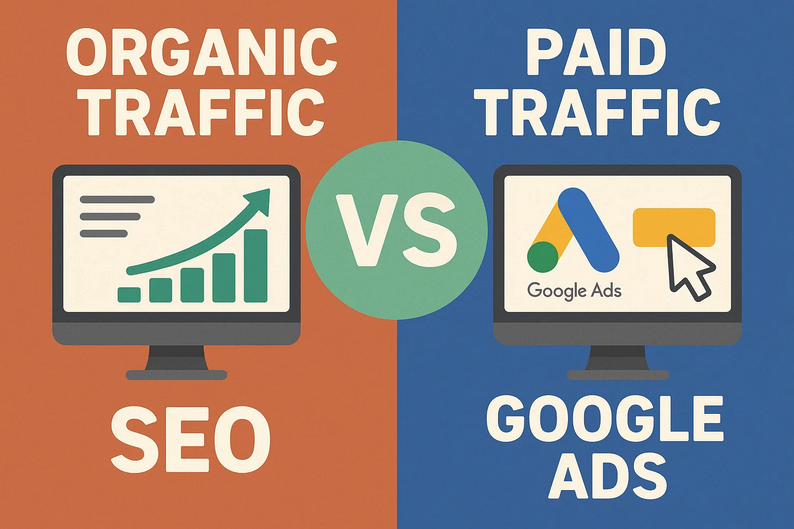
Some businesses lean hard into paid ads. Others focus on long-term SEO but the real question is: which method works best for you based on your budget, timeline and goals?
Let’s look at both options side by side so you can decide what makes the most sense for where you are right now.
What Is Organic Traffic?
Organic traffic comes from unpaid sources like Google search, social media sharing and in the broader sense can include links from other websites. It’s the traffic you earn, not the traffic you buy.
You get it by:
- Ranking in search engines for relevant keywords
- Publishing content people find helpful or shareable
- Building authority and trust over time
It’s not instant but it builds real momentum and once it’s working, it keeps working.
Pros of Organic Traffic
- Cost-effective in the long run; no ongoing ad spend
- Higher trust factor; users often trust organic results more than ads
- Lasting value; great content can bring in traffic for months or years
- Compounding returns; success builds on itself
Cons of Organic Traffic
- Takes time; SEO results rarely show up overnight
- Requires consistency; content has to be useful and updated
- Can be unpredictable; algorithm changes can affect rankings
- Learning curve; SEO isn’t overly complex but it’s not automatic either
If you’re playing the long game and have the bandwidth to create strong content, organic traffic becomes a powerful asset.
What Is Paid Traffic?
Paid traffic is exactly what it sounds like; traffic that comes from advertising. Google Ads, Facebook, Instagram, YouTube, LinkedIn and other platforms let you pay for visibility.
You choose your audience, set your budget, and push traffic to your site. It’s fast and targeted.
Pros of Paid Traffic
- Immediate results; you can start seeing traffic today
- Precise targeting; reach specific demographics or interest groups
- Easy to test and measure; you can tweak campaigns based on what works
- Scalable; increase spend to increase reach
Cons of Paid Traffic
- Can get expensive; especially if you’re still fine-tuning your offer
- Short lifespan; traffic stops when the ads stop
- Ad fatigue; people often scroll past ads
- Platform dependence; rules or algorithm changes can affect your results
Paid traffic is ideal for launches, promotions or testing messaging. Just keep an eye on the numbers and make sure the return justifies the spend.
Which Type of Traffic Should You Use?
It really depends on what you’re trying to achieve and how quickly you need results.
If you need quick feedback or want to test offers then paid traffic gives you quick test data. If you want to build long-term authority and reduce your cost per lead over time, organic traffic is your foundation.
Here’s the reality: most growing businesses can benefit from bth.
A Smarter Approach: Use Organic Traffic and Paid Traffic Together
You don’t need to choose one over the other. In fact they work better together.
Use paid traffic to:
- Drive traffic to new or important content
- Test different headlines, angles or offers
- Retarget visitors who didn’t convert the first time
- Promote product launches or seasonal campaigns
Use organic traffic to:
- Build long-term trust and search visibility
- Reduce reliance on ad budgets over time
- Support evergreen content and SEO
- Attract users who avoid or ignore ads
When used strategically, organic and paid traffic support each other. Paid gives you speed. Organic gives you staying power.
Final Thoughts: Focus on What Moves the Needle
If you’re just starting out and want traction fast then paid traffic can help you get there.
If you’ve got strong content or a well known brand, organic traffic becomes your growth engine.
Regardless of where the clicks come from, the real goal is the same; turning visitors into customers.
Need help figuring out which strategy fits your stage of growth? Let’s talk. We help businesses build traffic plans that make sense and actually convert.